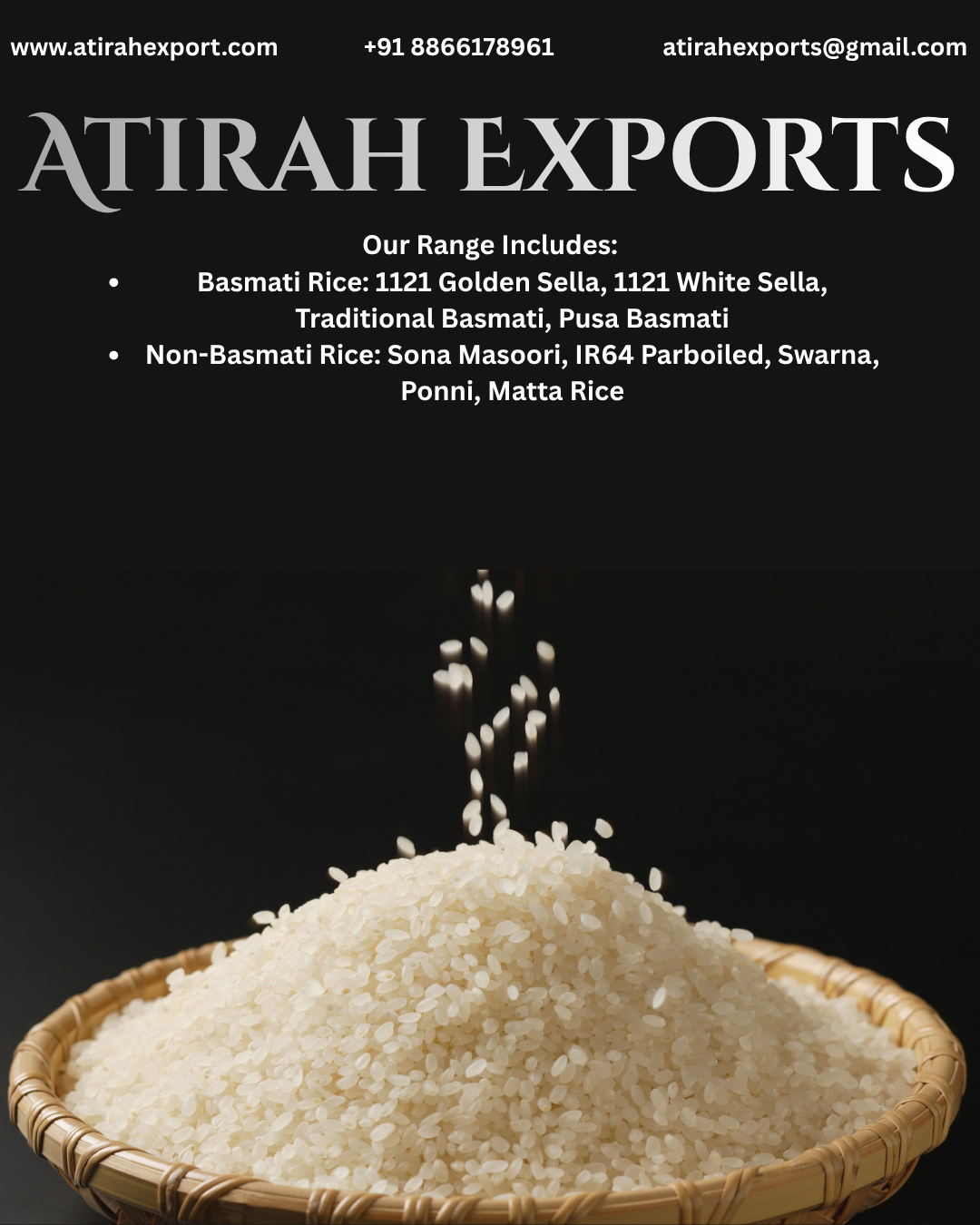
Rice is one of the world’s most important staple foods and is consumed across Asia, Africa, the Middle East, Europe, and many other international markets. However, the rice available for consumption is the result of a carefully controlled process that begins with paddy and ends with cleaned, graded, quality-checked, and properly packaged rice.
Basmati and Non-Basmati rice follow many of the same basic processing stages, but their varieties, physical characteristics, quality parameters, and market requirements can differ significantly.
For exporters, importers, wholesalers, distributors, retailers, and food businesses, understanding the rice processing process is important because processing directly influences appearance, cooking performance, purity, consistency, shelf life, and commercial value.
This guide explains the complete process of Basmati and Non-Basmati rice processing, from paddy selection to finished rice.
What Is Paddy Rice?
Paddy is rice that has been harvested from the rice plant while still retaining its outer husk.
After harvesting, the paddy contains several components, including:
- Husk
- Bran layer
- Germ
- Endosperm
The edible white rice is primarily the endosperm. The processing process removes the outer layers while attempting to preserve the rice kernels as much as possible.
The quality of the finished rice depends heavily on the quality of the original paddy.
Step 1: Paddy Selection and Procurement
The rice processing journey begins with selecting suitable paddy.
Different rice varieties are cultivated for different applications and markets. Basmati varieties are particularly valued for their characteristic aroma, long grain, slender appearance, and cooking properties.
Non-Basmati rice covers a much broader group of rice varieties with different grain lengths, shapes, textures, and cooking characteristics.
Before processing, paddy can be evaluated according to parameters such as:
- Variety
- Moisture content
- Grain size
- Grain maturity
- Foreign matter
- Damaged grains
- Immature grains
- Pest or insect damage
- Overall physical quality
Proper raw-material selection helps processors achieve consistent finished-rice quality.
Step 2: Paddy Cleaning
Harvested paddy may contain materials that should not enter the milling system.
The cleaning stage removes unwanted materials such as:
- Stones
- Dust
- Straw
- Soil particles
- Seeds
- Light impurities
- Other foreign materials
Modern rice-processing facilities use mechanical cleaning equipment and separation systems to improve the purity of the incoming paddy.
Effective cleaning is important because foreign materials can affect machinery performance and finished-product quality.
Step 3: Paddy Drying
Moisture management is a critical part of rice processing.
Freshly harvested paddy generally contains more moisture than what is suitable for efficient storage and milling. Therefore, controlled drying may be required.
The objective is to bring moisture to an appropriate level while minimizing grain damage.
Poor drying can contribute to:
- Cracking
- Grain breakage
- Reduced milling yield
- Quality deterioration
- Storage problems
Controlled drying therefore plays an important role in maintaining the physical integrity of rice kernels.
Step 4: Storage of Paddy
After appropriate drying, paddy may be stored before milling.
Storage conditions should be managed carefully to protect the grain from:
- Moisture
- Insects
- Rodents
- Contamination
- Excessive temperature
- Microbial deterioration
Proper storage helps preserve the quality of the paddy until it enters the milling process.
For export-oriented rice processing, maintaining traceability and proper stock management is also important.
Step 5: Dehusking
The next major stage is dehusking.
Paddy consists of a rice kernel enclosed within an outer husk. A rice husker removes this husk through controlled mechanical action.
After dehusking, the resulting material generally consists of:
- Brown rice
- Remaining paddy
- Husk
The remaining paddy can be separated and returned to the husking process.
The objective is to remove the husk while minimizing damage to the rice kernel.
Step 6: Paddy Separation
After husking, the mixture contains brown rice as well as some unhusked paddy.
A paddy separator separates these materials based on their physical characteristics.
The unhusked paddy can be returned for another husking cycle, while the brown rice proceeds toward further processing.
Efficient separation helps improve milling efficiency and reduce unnecessary grain damage.
Step 7: Rice Whitening
Brown rice still contains the bran layer.
For producing white rice, the bran layer is gradually removed through whitening.
The whitening process is carefully controlled because excessive mechanical pressure can increase broken grains.
The resulting rice is closer to the familiar white rice consumed in households and food-service applications.
The degree of whitening can vary depending on the desired product specification.
Step 8: Rice Polishing
After whitening, rice may undergo polishing.
Polishing improves the appearance and surface characteristics of the rice by removing remaining bran particles and creating a smoother kernel surface.
Depending on the processing system and product specification, different polishing technologies may be used.
The objective is to achieve the required appearance without unnecessarily damaging the rice.
Step 9: Length Grading and Separation
After milling and polishing, rice kernels may differ in size because some kernels break during processing.
Length grading equipment separates whole kernels from different categories of broken rice.
Typical commercial categories can include:
- Head rice
- Broken rice
- Small broken rice
The exact classification depends on the buyer’s specification, market requirements, and applicable standards.
Length grading helps processors produce a more consistent finished product.
Step 10: Color Sorting
Modern rice-processing facilities may use optical color sorters to identify and remove undesirable kernels.
Color sorting can help remove grains that differ from the desired appearance because of:
- Discoloration
- Damage
- Foreign material
- Abnormal color
- Certain quality defects
Optical sorting is particularly valuable when consistent visual quality is important for domestic and international markets.
Step 11: Quality Inspection
Quality control is an essential part of rice processing.
Finished rice may be evaluated against agreed specifications and applicable food-safety requirements.
Depending on the product and destination market, quality checks may include:
- Moisture
- Grain length
- Grain width
- Broken percentage
- Foreign matter
- Damaged grains
- Discolored grains
- Milling quality
- Purity
- Aroma where applicable
- Cooking characteristics
- Other buyer-specific parameters
For export shipments, additional laboratory testing or certification may be required depending on the importing country’s regulations and buyer requirements.
Basmati Rice Processing
Basmati rice is a premium rice category particularly associated with its characteristic fragrance, slender grains, and distinctive cooking properties.
Common Basmati varieties include:
- Traditional Basmati
- 1121 Basmati
- 1509 Basmati
- 1401 Basmati
The processing principles are broadly similar to other rice varieties, but Basmati rice requires careful handling because its commercial value depends strongly on grain appearance, aroma, length, cooking performance, and consistency.
Why Basmati Rice Requires Careful Processing
Basmati rice is often purchased according to detailed specifications.
Buyers may consider:
- Grain length
- Grain slenderness
- Broken percentage
- Moisture
- Purity
- Aroma
- Cooking characteristics
- Grain appearance
- Packaging
- Origin
- Required documentation
Therefore, the processing system needs to maintain consistency from raw material selection through final packaging.
Basmati Rice Aging
Aging is an important characteristic associated with many premium Basmati rice products.
Properly aged Basmati rice can develop desirable cooking characteristics, including improved texture and grain separation.
Depending on the specific product and commercial specification, Basmati rice may be stored for a controlled period before final processing or marketing.
However, aging requirements can vary by variety, processor, market, and buyer specification.
Therefore, buyers should clearly define their required Basmati specification before placing commercial orders.
Non-Basmati Rice Processing
Non-Basmati rice represents a wide range of rice varieties that do not fall within the Basmati category.
One example is IR64 rice, which is traded extensively in international markets.
Non-Basmati rice can differ significantly in:
- Grain length
- Grain shape
- Texture
- Cooking properties
- Appearance
- Starch characteristics
- Market application
The processing stages remain broadly similar, but the final specifications depend on the particular variety and buyer requirements.
Basmati vs Non-Basmati Rice Processing
Although both categories generally undergo cleaning, drying, husking, milling, grading, sorting, and packaging, there are important commercial differences.
| Parameter | Basmati Rice | Non-Basmati Rice |
|---|---|---|
| Grain profile | Generally long and slender | Varies by variety |
| Aroma | Characteristic aroma | Varies |
| Market positioning | Premium | Broad market segments |
| Varieties | Traditional, 1121, 1509, 1401 | IR64 and many other varieties |
| Buyer specifications | Often highly detailed | Depends on market and application |
| Aging | Commonly relevant for premium products | Product dependent |
| Quality focus | Length, aroma, cooking, purity | Variety-specific specifications |
| Processing | Controlled milling and sorting | Controlled milling and sorting |
The key point is that there is no single specification for all rice. The correct processing and final product specification should be determined according to the rice variety and buyer requirements.
Step 12: Final Grading and Quality Control
Before packaging, the finished rice can undergo a final inspection.
This stage confirms whether the product meets the agreed specifications.
Quality teams may check:
- Appearance
- Grain uniformity
- Moisture
- Broken percentage
- Foreign matter
- Purity
- Packaging requirements
- Product-specific parameters
For international orders, buyer specifications should be documented clearly before production or final processing.
Step 13: Rice Packaging
Packaging protects the rice during storage, transportation, handling, and distribution.
Rice can be packed in different formats depending on the buyer’s requirements and market.
Possible packaging options include:
- Retail bags
- Bulk bags
- Woven polypropylene bags
- Laminated bags
- Printed bags
- Private-label packaging
- Buyer-specific packaging formats
Pack sizes can also vary according to market requirements.
For export orders, the packaging should be suitable for the intended transportation and destination market.
Step 14: Export Documentation and Shipment
Once the rice has been processed, inspected, packed, and approved, the shipment can proceed through the export process.
Depending on the destination and transaction, export documentation may include:
- Commercial Invoice
- Packing List
- Certificate of Origin
- Bill of Lading
- Phytosanitary Certificate where applicable
- Health or sanitary documentation where applicable
- Certificate of Analysis where required
- Other product-specific or destination-specific documents
The exact documentation depends on the importing country, product specification, regulatory requirements, buyer requirements, and agreed Incoterm.
From Paddy to International Buyer
The complete rice journey can therefore be summarized as:
Paddy Selection
↓
Cleaning
↓
Drying
↓
Storage
↓
Dehusking
↓
Paddy Separation
↓
Whitening
↓
Polishing
↓
Grading
↓
Color Sorting
↓
Quality Inspection
↓
Packaging
↓
Export Documentation
↓
Shipment
↓
International Buyer
Every stage can influence the final commercial value of the rice.
Why Rice Quality Control Matters in International Trade
International rice buyers generally require consistency, not simply a good-looking sample.
A successful supply relationship depends on maintaining consistency between:
- Approved sample
- Commercial specification
- Production batch
- Packing
- Shipment documentation
- Delivered goods
This is particularly important for importers, distributors, wholesalers, supermarkets, food-service companies, and private-label businesses.
A professional export supply process therefore begins with understanding the buyer’s exact requirements before proposing the product.
Choosing the Right Rice Specification
Before purchasing Basmati or Non-Basmati rice, international buyers should clearly define their requirements.
Important questions include:
- Which rice variety is required?
- What grain length is required?
- What percentage of broken rice is acceptable?
- What moisture level is required?
- Is aging required?
- What packaging format is preferred?
- What bag weight is required?
- Is private labeling required?
- What certifications or documents are required?
- What is the destination port?
- What quantity is required?
- What Incoterm is preferred?
- What shipment schedule is required?
Clear specifications reduce misunderstandings and make commercial negotiations more efficient.
Basmati and Non-Basmati Rice for Global Markets
India is an important source of rice for international markets, with buyers sourcing different varieties according to their regional consumption patterns and commercial requirements.
Basmati rice is often positioned as a premium product, while Non-Basmati varieties serve a broad range of markets and applications.
For an international buyer, the right supplier should be able to understand the required variety, quality specification, packaging, documentation, logistics, and destination-market requirements rather than simply offering a generic rice quotation.
Atirah Exports – India-Based Rice Sourcing Partner
Atirah Exports is a Surat, Gujarat-based Indian merchant export company working with international buyers for sourcing products from India.
For rice requirements, Atirah Exports can work according to buyer-specific specifications covering:
- Basmati rice
- Traditional Basmati
- 1121 Basmati
- 1509 Basmati
- 1401 Basmati
- Non-Basmati rice
- IR64 rice
The objective is not simply to supply a standard product, but to understand the buyer’s specific requirement and coordinate sourcing, quality, packaging, documentation, logistics, and shipment accordingly.
This buyer-specific approach helps create a more structured path from requirement to shipment.
Conclusion
The processing of Basmati and Non-Basmati rice involves much more than simply removing the husk from paddy.
From paddy selection and drying to dehusking, whitening, polishing, grading, optical sorting, quality inspection, packaging, documentation, and shipment, every stage can influence the final product.
Basmati rice requires particular attention to grain characteristics, aroma, appearance, cooking performance, and consistency, while Non-Basmati rice specifications vary according to the variety and intended market.
For international buyers, the most important step is to establish clear product specifications before sourcing. When quality, variety, packaging, quantity, documentation, destination port, and commercial terms are clearly defined, the overall procurement and export process becomes more transparent and manageable.
Atirah Exports approaches rice sourcing through a requirement-to-shipment model, helping international buyers identify and coordinate suitable Indian supply according to their specific commercial requirements.
For Basmati or Non-Basmati rice requirements, buyers can discuss their desired variety, specifications, packaging, quantity, destination port, and shipment requirements directly with Atirah Exports.
Website: www.atirahexport.com
Email: info.ae@atirahexport.com | atirahexports@gmail.com
WhatsApp: +91 8160378961 | +91 7990922402 | +91 8866178961
Location: Surat, Gujarat, India