Importing Indian Food Products: The Complete International Buyer’s Guide to Rice, Spices, Tea & Coffee
India is one of the world’s most important sourcing destinations for agricultural and food products. Its diverse agricultural base, established processing industries, extensive supplier network and export ecosystem give international buyers access to a wide range of products from a single sourcing market.
For importers, wholesalers, distributors, retailers, foodservice companies and private-label businesses, India can be a valuable sourcing destination for products such as Basmati rice, non-Basmati rice, spices, tea and coffee.
However, successful importing is not simply about finding a supplier and obtaining a price. The real challenge is identifying the right product specification, verifying the supplier, confirming quality, selecting appropriate packaging, understanding documentation requirements and coordinating the shipment correctly.
This guide explains the key considerations international buyers should understand before importing Indian food products.
1. Why Source Food Products from India?
India offers international buyers a combination of product diversity and a large agricultural and food-processing ecosystem.
A buyer looking for rice may have access to different Basmati varieties as well as non-Basmati varieties. Spice buyers can source whole or ground spices depending on their market requirements. Tea buyers can consider CTC and green tea options, while coffee buyers may evaluate beans or instant coffee according to their intended application.
This diversity creates an important advantage: buyers can potentially consolidate several sourcing requirements through one reliable Indian merchant-export partner.
At the same time, product availability, specifications, pricing and export suitability can differ considerably between suppliers. Therefore, buyers should evaluate each product according to their own market requirements rather than selecting products based only on a supplier’s standard catalogue.
2. Understanding Your Product Requirement
One of the most important steps in international sourcing is defining the product before requesting a quotation.
A request such as “Please quote rice” or “Please send your best price for spices” may not provide enough information for an accurate commercial offer.
Depending on the product, buyers should clarify:
- Exact product or variety
- Grade or specification
- Quality parameters
- Origin requirements
- Processing requirements
- Packaging format
- Bag weight
- Private-label requirements, if applicable
- Order quantity
- Destination port
- Required delivery schedule
- Applicable import or compliance requirements
- Preferred Incoterm
- Payment expectations
For rice, for example, the buyer may need to specify Basmati or non-Basmati, variety, grain characteristics, broken percentage, moisture requirements, packaging and quantity.
For tea, the buyer may need to identify the desired grade, such as a particular CTC grade or green tea specification.
The more precise the requirement, the more accurately an exporter can source and quote.
3. Importing Basmati Rice from India
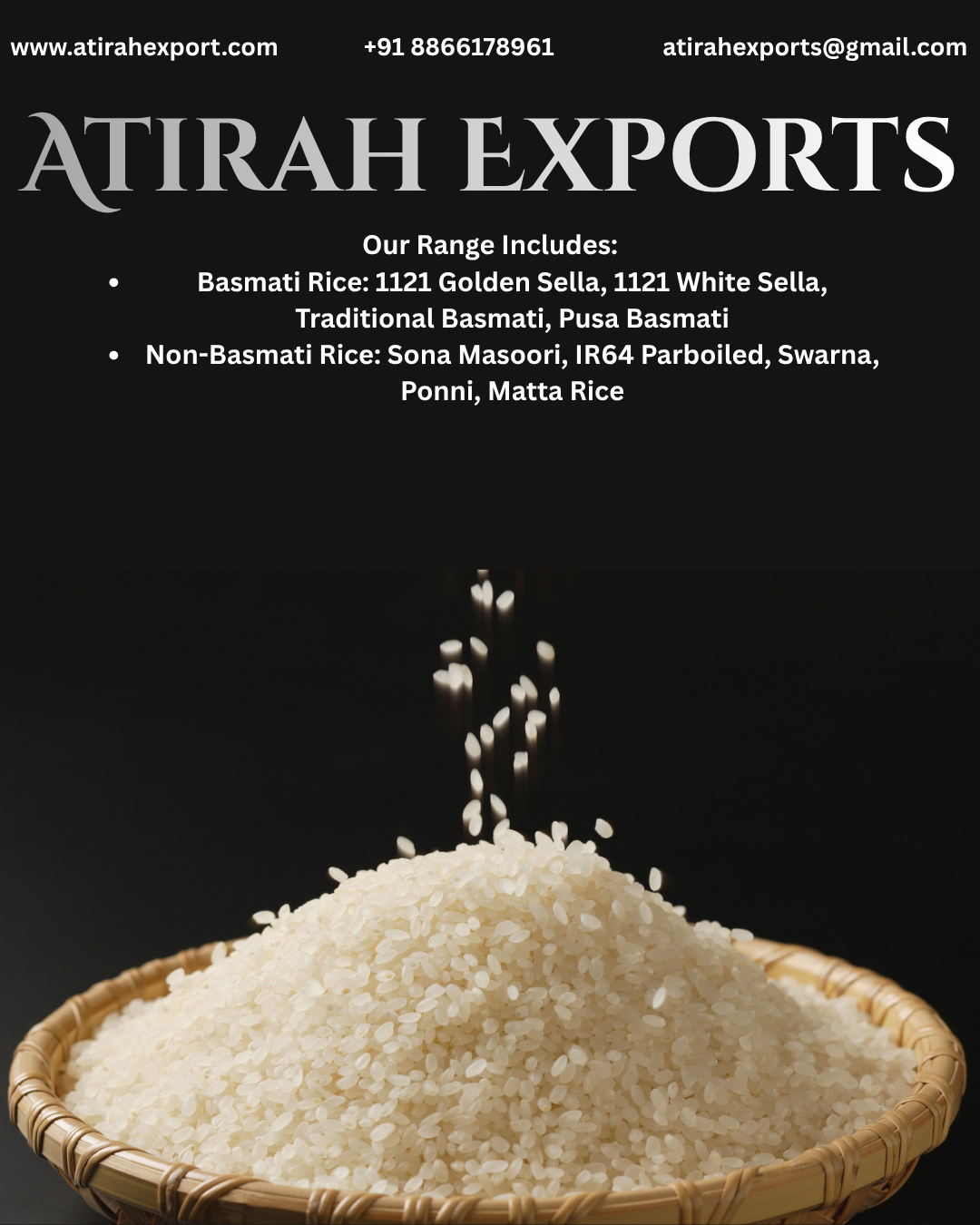
Basmati rice is one of India’s most internationally recognized food exports.
International buyers may encounter varieties such as Traditional Basmati, 1121 Basmati, 1509 Basmati and 1401 Basmati, depending on the market and specification.
However, the variety name alone does not define the complete commercial specification.
A professional buyer should consider parameters such as:
- Grain characteristics
- Average grain length
- Broken percentage
- Moisture
- Foreign matter
- Sortex and cleaning requirements
- Aroma and cooking characteristics
- Crop or production considerations
- Packaging
- Quantity
- Destination-market requirements
Sampling is particularly important when purchasing rice in commercial quantities. The approved sample should be linked clearly to the final commercial specification so that both buyer and supplier have the same quality reference.
4. Importing Non-Basmati Rice
Non-Basmati rice serves many international markets, including wholesale, foodservice, institutional and retail applications.
Indian non-Basmati rice can include different varieties and specifications suited to different culinary and commercial requirements. IR64, for example, is one specification buyers may encounter in international trade.
The appropriate variety should be selected according to the buyer’s market, cooking application, customer preferences and target price segment.
Before placing a bulk order, buyers should establish:
- Variety
- Grain type and appearance
- Broken percentage
- Moisture
- Cleaning and sorting requirements
- Packaging
- Bag weight
- Quantity
- Destination port
- Required documentation
- Applicable destination-country regulations
Price should not be evaluated independently from quality and specification. A lower quotation may reflect differences in grade, processing, packaging, terms or other commercial parameters.
5. Importing Indian Spices
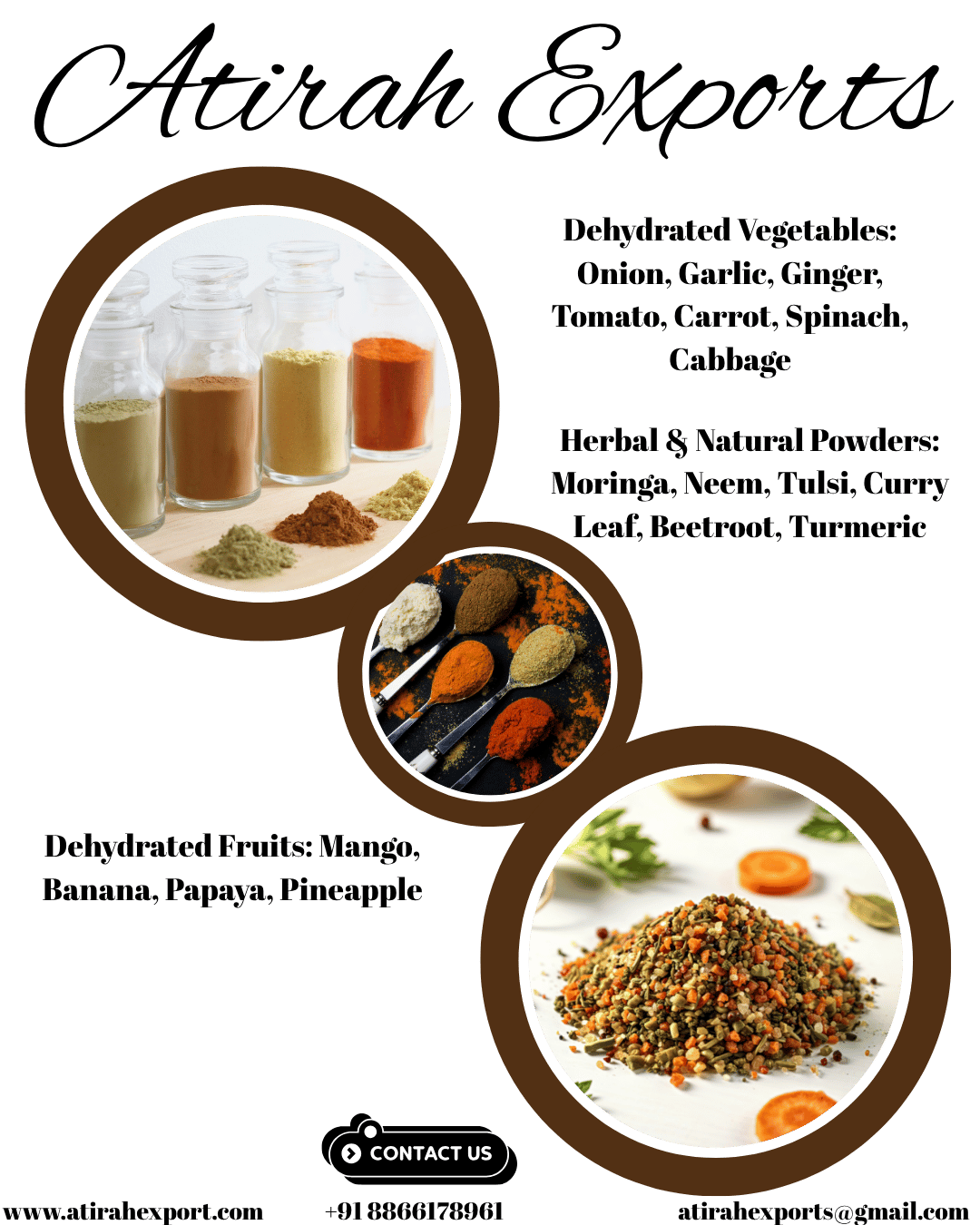
India is widely recognized for its spice production and processing capabilities.
International buyers can source spices in different forms, including whole spices and ground spices, depending on their application.
For commercial spice sourcing, buyers should pay particular attention to:
- Botanical/product identity
- Origin
- Purity
- Moisture
- Cleanliness
- Foreign matter
- Particle size for ground spices
- Packaging
- Shelf-life considerations
- Microbiological and other testing requirements where applicable
- Destination-market compliance
Food safety requirements can vary significantly between countries and product categories. Buyers should therefore communicate their destination-market specifications before finalizing the supply.
For private-label or retail businesses, packaging and labelling requirements should also be discussed at an early stage.
6. Importing Indian Tea
India has a long-established tea industry and offers different tea categories for international buyers.
CTC tea is particularly relevant for markets where strong tea liquor and specific brewing characteristics are preferred. Buyers may encounter grades such as BOP-SM, PD-A and Dust depending on the required specification.
Indian green tea is another sourcing category, with buyers potentially looking for natural or organic specifications according to their requirements and applicable certification needs.
When sourcing tea, buyers should evaluate:
- Tea type
- Grade
- Leaf appearance
- Liquor characteristics
- Aroma
- Taste profile
- Moisture
- Packaging
- Origin
- Testing or certification requirements
- Target market
Tea is highly specification-sensitive. Two teas from the same broad category may produce noticeably different cup characteristics. Sampling and evaluation are therefore valuable before committing to commercial quantities.
7. Importing Indian Coffee
India is also an established coffee-producing and processing market.
International buyers may source coffee according to their intended use, including coffee beans or instant coffee.
For coffee procurement, the specification can include:
- Coffee type
- Bean or product format
- Grade
- Processing requirements
- Moisture
- Packaging
- Intended application
- Quantity
- Destination
- Required certifications or testing
Roasters, distributors, foodservice businesses and private-label brands may have very different requirements. A supplier should therefore understand the buyer’s application before recommending a specification.
8. Quality Control: Do Not Rely Only on a Catalogue
A supplier catalogue is useful for understanding product availability, but it should not replace product verification.
A professional sourcing process can include:
- Requirement confirmation
- Product specification sheet
- Sample selection
- Sample approval
- Commercial quotation
- Packaging confirmation
- Pre-shipment quality checks where appropriate
- Documentation verification
- Shipment coordination
- Post-arrival review
Depending on the product and destination, buyers may also require laboratory testing, certificates, inspection reports or other documentation.
The exact requirements should be established before shipment rather than discovered after the goods have been dispatched.
9. Packaging Is a Commercial Decision
Packaging is not simply about putting the product into a bag.
The right packaging must consider product protection, transportation, storage, handling, retail presentation and destination-market requirements.
Depending on the product and buyer’s needs, packaging discussions may include:
- Bag weight
- Packaging material
- Inner and outer packaging
- Printed bags
- Private-label packaging
- Carton requirements
- Palletization where applicable
- Labelling
- Shipping marks
For retail buyers, packaging and labelling can be particularly important because the final packaging may need to satisfy destination-market requirements.
10. Documentation and Compliance
International food trade involves documentation beyond a commercial invoice.
The exact documentation depends on the product, origin, destination country, buyer requirements, shipment terms and applicable regulations.
Depending on the transaction, documents may include commercial and shipping documentation, certificates of origin, packing details, product-specific certificates, inspection or testing documents and other documents required by the importing country or buyer.
Importers should confirm the required document set with their customs broker, regulatory adviser or relevant authorities in the destination country.
A reliable exporter should be able to coordinate the agreed documentation accurately and consistently with the shipment.
11. Choosing the Right Incoterm
International buyers should clearly establish the commercial basis of the quotation.
Common Incoterms used in international trade include FOB, CFR and CIF, among others.
The Incoterm affects which party is responsible for particular costs, activities and risks.
For example, a buyer comparing two quotations should not compare only the headline product price if one quotation is FOB and another includes freight to the destination port.
The quotation should therefore clearly state:
- Product specification
- Quantity
- Unit price
- Currency
- Incoterm
- Port of loading
- Destination port where relevant
- Packaging
- Payment terms
- Lead time
- Validity
- Included/excluded charges
This creates a much more meaningful commercial comparison.
12. How to Select a Reliable Indian Export Partner
Supplier selection is one of the most important decisions in the importing process.
Instead of evaluating a company only on price, buyers should consider:
- Legal business identity
- Relevant registrations and licences
- Product knowledge
- Communication quality
- Specification accuracy
- Sample process
- Documentation capability
- Quality-control practices
- Packaging capability
- Logistics coordination
- Transparency in commercial terms
- Responsiveness after the order
A buyer should also distinguish between a supplier being legitimate and a supplier being suitable for a particular transaction.
A verified business identity is important, but reliability is ultimately demonstrated through the quality and consistency of each transaction.
13. Why a Merchant Exporter Can Be Valuable
International buyers do not always need to manage relationships with multiple Indian manufacturers for every product category.
A capable merchant exporter can coordinate sourcing from suitable Indian suppliers according to the buyer’s specifications.
This can be particularly useful when a buyer wants products such as rice, spices, tea and coffee from India without establishing separate sourcing channels for every category.
The merchant-export model can provide a single commercial communication point while coordinating product sourcing, quality discussions, packaging, documentation and shipment execution.
However, the buyer should still require product-specific specifications, samples and documentation rather than relying on a generic product catalogue.
14. A Practical First-Order Process
For a new buyer, a controlled first transaction is often the most practical approach.
A recommended process is:
Step 1: Define the exact product requirement.
Step 2: Share quantity, packaging and destination-port details.
Step 3: Receive the supplier’s specification and quotation.
Step 4: Verify the supplier’s business identity and relevant credentials.
Step 5: Request and evaluate samples where appropriate.
Step 6: Confirm final specifications, packaging, price, Incoterm and payment terms in writing.
Step 7: Confirm the beneficiary bank details through an appropriate verification process.
Step 8: Finalize the order and documentation requirements.
Step 9: Conduct pre-shipment quality inspection or testing where appropriate.
Step 10: Review shipment documents before dispatch.
Step 11: Evaluate the goods after arrival.
Step 12: If performance is satisfactory, develop the relationship toward repeat orders and broader sourcing.
This approach allows both parties to establish commercial confidence before moving toward larger volumes.
15. One Sourcing Partner for Multiple Indian Products
For importers, distributors and wholesalers, sourcing multiple complementary products from India can simplify procurement.
A buyer may require rice for one product line, spices for another, tea for retail distribution and coffee for foodservice or private-label operations.
Rather than treating every product as an isolated transaction, a strategic sourcing partner can understand the broader procurement requirement and coordinate suitable Indian supply channels.
This is where a merchant exporter can provide value beyond a simple product quotation.
The objective should be straightforward:
Understand the buyer’s requirement → identify suitable Indian supply → verify specifications → coordinate samples and quality → finalize packaging and commercial terms → manage documentation and shipment → build a long-term supply relationship.
Why Atirah Exports?
Atirah Exports is a Surat-based, woman-led Indian merchant export company focused on buyer-specific sourcing, transparent communication and long-term international business relationships.
Rather than limiting its role to selling a fixed catalogue, Atirah Exports approaches each requirement according to the buyer’s specific product, specification, packaging, quantity, destination port and commercial needs.
Its sourcing portfolio includes Basmati rice, non-Basmati rice, tea, coffee, spices and other selected Indian export products.
The company’s approach is built around Requirement-to-Shipment Ownership: understanding what the buyer actually needs, coordinating suitable Indian sourcing, supporting sample and quality discussions, arranging packaging, managing export documentation and coordinating shipment through to delivery.
This enables international buyers to work with one identifiable sourcing partner while accessing India’s broader supplier network.
Atirah Exports also remains open to supplying additional relevant products according to a buyer’s requirements rather than restricting the relationship to one product category.
For a new international buyer, the objective is not simply to obtain the lowest quotation. It is to establish a sourcing relationship based on accurate specifications, transparent commercial communication, controlled quality and dependable execution.
Conclusion
India offers international buyers substantial opportunities to source rice, spices, tea and coffee. But successful importing requires more than identifying a product and requesting a price.
The strongest sourcing relationships begin with precise specifications and continue through sampling, quality verification, packaging, documentation, logistics and post-shipment evaluation.
Whether you are looking to import Basmati rice, non-Basmati rice, Indian spices, tea, coffee or multiple food products, selecting an appropriate sourcing partner can make the process considerably more structured.
For international buyers, the ideal Indian export partner should not simply ask, “What product do you want?”
The better question is:
“What exactly does your market require, and how can we build the right Indian supply solution around it?”
That is the foundation of sustainable international sourcing.
Frequently Asked Questions
1. What food products can I import from India?
India offers a wide range of agricultural and food products. Depending on the supplier and destination-market requirements, international buyers can source products including Basmati rice, non-Basmati rice, spices, tea, coffee and many other food categories.
2. How can I import Basmati rice from India?
Start by defining the required variety and specifications, quantity, packaging, destination port and commercial terms. Request a quotation and sample where appropriate, verify the supplier, confirm the final specification and documentation, and then proceed with the commercial order.
3. What should I check before importing Indian spices?
Check the exact spice, whole or ground format, purity, moisture, cleanliness, foreign matter, required testing, packaging and destination-country compliance requirements.
4. Can I import Indian tea under my own brand?
Private-label possibilities can be discussed with the exporter according to product, packaging, quantity and destination-market requirements. Labelling and regulatory requirements should be established before production and shipment.
5. Can one Indian exporter supply multiple food products?
Yes. A merchant exporter may coordinate multiple product categories through its Indian sourcing network. However, each product should still be evaluated according to its own specification, quality and compliance requirements.
6. Should I request samples before placing a bulk order?
For many food products, sampling is a useful part of the purchasing process. It allows the buyer to evaluate the product against the required specification before committing to commercial volume.
7. What information should I send an Indian exporter for a quotation?
Ideally provide the exact product or variety, specification, quantity, preferred bag weight, packaging material, destination port, required delivery schedule and preferred commercial terms.
8. What Incoterms can be used when importing from India?
Depending on the transaction, terms such as FOB, CFR and CIF may be considered. The appropriate Incoterm should be agreed clearly between buyer and seller based on the shipment structure and responsibilities.
9. How can I verify an Indian exporter?
Review the company’s legal identity, relevant registrations or licences, business information, product capability, communication history and transaction process. For a first transaction, use a controlled approach with written specifications, samples, appropriate verification and agreed documentation.
10. Why work with Atirah Exports?
Atirah Exports focuses on buyer-specific sourcing rather than simply offering a generic catalogue. The company can coordinate relevant Indian products according to the buyer’s requirements, including specification, packaging, quality coordination, documentation and shipment requirements.
Ready to Source from India?
If you are looking for a reliable Indian sourcing partner for rice, spices, tea, coffee or other relevant Indian products, share your requirement with Atirah Exports.
Please provide:
- Product / variety
- Required specification
- Quantity
- Preferred bag weight
- Packaging material
- Destination port
- Target market
- Preferred Incoterm, if known
Atirah Exports can then review the requirement and work toward a suitable sourcing and export solution.
Atirah Exports
Surat, Gujarat, India
Email: info.ae@atirahexport.com | atirahexports@gmail.com
Website: www.atirahexport.com
WhatsApp: +91 8160378961 | +91 7990922402 | +91 8866178961