7 Questions Every Importer Should Ask an Indian Exporter Before Placing an Order
A Practical Buyer’s Guide to Safer and Smarter Sourcing from India
India offers international buyers an extensive sourcing ecosystem across food products, agricultural commodities, spices, tea, coffee, textiles, packaging, and many other product categories.
But finding a supplier is only the beginning.
For an importer, the real challenge is determining whether an exporter can consistently deliver the required specification, quality, packaging, documentation, commercial terms, and shipment execution.
A competitive quotation may attract attention, but a successful international transaction depends on much more than price.
Before placing an order with an Indian exporter, every serious buyer should ask these seven questions.
1. What Exactly Are You Supplying, and Can You Meet My Required Specifications?
The word “rice,” “tea,” “spice,” “coffee,” or even “food product” does not define a complete commercial specification.
Different buyers may require different varieties, grades, origins, processing standards, moisture levels, particle sizes, packaging formats, tolerances, certifications, or destination-market requirements.
An importer should therefore ask:
- What exact variety or grade will be supplied?
- What specifications can you guarantee?
- What quality parameters will appear in the commercial specification?
- Can the product be supplied consistently according to the approved sample?
- Can you accommodate buyer-specific requirements?
A professional exporter should not simply respond with a product name and price. The supplier should first understand what the buyer actually needs.
What a good exporter should provide
The exporter should be able to convert the buyer’s requirement into a clear written product specification before commercial confirmation.
Atirah Exports follows this requirement-first approach. As a merchant exporter, we work around the buyer’s required specification rather than expecting the buyer to select only from a fixed generic offering.
The objective is simple:
Understand the requirement first. Source accordingly. Then confirm the commercial solution.
2. How Do You Verify Product Quality Before Shipment?
Price and product photographs are not sufficient for an international purchase.
A buyer needs confidence that the goods shipped will correspond with the agreed specification.
Ask the exporter:
- How is quality checked?
- Who performs the inspection?
- Is a pre-shipment inspection possible?
- Can samples be approved before bulk production or procurement?
- What happens if the delivered product does not match the agreed specification?
For food and agricultural products, buyers may also need appropriate testing, quality documentation, certificates, or destination-specific compliance documentation depending on the product and importing country.
What a good exporter should provide
A reliable exporter should establish a clear quality-control process before shipment rather than treating quality as an assumption.
For a first transaction, a controlled process can include:
Requirement → Sample → Approval → Commercial Confirmation → Quality Verification → Packing → Shipment
This reduces misunderstandings between buyer and supplier.
Atirah Exports approaches international orders with the principle that quality should be agreed and controlled before shipment—not debated after arrival.
3. Can You Provide Samples and Supporting Quality or Compliance Documents?
For many international buyers, a sample is not merely a formality.
It is an important part of supplier qualification.
Before placing a substantial order, ask:
- Can you provide a representative sample?
- Can the sample be evaluated against the buyer’s specifications?
- Which quality documents are available for the particular product?
- Can required export documents be provided?
- Can destination-country requirements be reviewed before shipment?
The exact documentation depends on the product, destination, transaction structure, and applicable regulations.
Therefore, an exporter should avoid making blanket promises about documentation without first understanding the specific shipment.
What a good exporter should provide
A professional export partner should discuss documentation early in the transaction.
This allows the buyer and exporter to identify requirements before goods are dispatched.
For international trade, documentation is not an administrative afterthought. It is part of the transaction itself.
4. What Packaging Options Are Available?
Packaging can directly affect product protection, shelf life, handling, storage, branding, customs clearance, and logistics costs.
An importer should ask:
- What bag or packaging formats are available?
- What standard weights can be supplied?
- What packaging material is suitable for the product?
- Can buyer-specific packaging requirements be accommodated?
- Is private-label or customized packaging possible for the particular product?
- How will the goods be packed for international transportation?
The right answer depends on the product and the buyer’s market.
For example, a bulk commodity shipment and a retail-ready food product may require completely different packaging approaches.
What a good exporter should provide
The exporter should discuss packaging as part of the commercial specification rather than after the order has already been finalized.
Atirah Exports works with buyer-specific requirements and coordinates appropriate sourcing and execution based on the product, packaging requirement, destination, and commercial feasibility.
5. What Export Documentation Will You Provide?
A successful shipment requires more than loading goods into a container.
Depending on the transaction, documentation can involve commercial invoices, packing lists, shipping documents, certificates of origin, product-specific certificates, inspection documents, and other documentation required by the buyer, destination country, or applicable authorities.
An importer should therefore ask:
“Which documents will you provide for my specific shipment, and who will coordinate them?”
The answer should be clear before the order moves into execution.
What a good exporter should provide
The exporter should establish a product- and destination-specific documentation checklist before shipment.
This helps prevent avoidable discrepancies between:
- Commercial documents
- Product details
- Packaging information
- Shipping information
- Regulatory requirements
Atirah Exports treats export documentation as part of shipment execution and coordinates the required documentation according to the transaction and applicable requirements.
6. What Are Your Payment Terms, Incoterms, MOQ, and Realistic Lead Time?
A low product price does not necessarily mean a low landed cost.
Before accepting a quotation, an importer should understand the complete commercial structure.
Ask:
- What is the minimum order quantity?
- Which Incoterm is being offered?
- What is included in the quoted price?
- What are the payment terms?
- What is the expected production/procurement lead time?
- What is the estimated shipment schedule?
- Which destination port will be used?
- Are freight and other applicable charges included or excluded?
These details can materially change the actual economics of an import transaction.
What a good exporter should provide
A professional exporter should present the quotation in a way that allows the buyer to understand exactly what is being offered.
The objective should not simply be to quote the lowest possible number.
The objective should be to develop a commercially practical solution balancing:
Product Quality + Price + Packaging + Logistics + Payment Terms + Documentation + Delivery
Atirah Exports works with buyers to understand these requirements before finalizing the commercial proposal.
7. Who Will Take Responsibility If Something Goes Wrong?
This may be the most important question of all.
International trade involves multiple moving parts:
- Product sourcing
- Quality verification
- Packaging
- Documentation
- Freight coordination
- Customs procedures
- Shipping
- Delivery
- Communication between multiple parties
When everything goes smoothly, responsibility is easy.
The real test of an export partner comes when something unexpected happens.
Ask:
“Who will coordinate with me if there is a problem before shipment or during execution?”
A buyer should know who is accountable for communication and coordination.
What a good exporter should provide
The buyer should have a clearly identifiable commercial contact who understands the transaction from beginning to end.
Atirah Exports is an owner-led merchant export company. Our approach is based on direct communication, buyer-specific sourcing, coordinated execution, and accountability throughout the transaction.
We do not view our role as simply connecting a buyer with a supplier.
Our objective is to take ownership of the sourcing and export-coordination process.
The Real Question Is Not “Who Has the Lowest Price?”
International buyers often begin supplier evaluation with price.
That is understandable.
But the lowest quotation can become expensive if it results in:
- inconsistent quality,
- incorrect specifications,
- unsuitable packaging,
- documentation problems,
- shipment delays,
- communication gaps,
- or unexpected costs.
A better question is:
“Which export partner can give me the best combination of quality, commercial value, execution, transparency, and reliability?”
That is the difference between purchasing from a supplier and developing a strategic sourcing relationship.
Why the Right Indian Merchant Exporter Can Make a Difference
India has a large and diverse supplier base.
An international buyer may be able to find manufacturers, processors, wholesalers, traders, and exporters for almost every major product category.
But managing multiple suppliers can create additional work.
A capable merchant exporter can potentially help buyers source different relevant products through one commercial relationship, while coordinating specifications, sourcing, packaging, documentation, logistics, and communication.
This is particularly useful for buyers who want to build or expand their India sourcing portfolio without creating unnecessary supplier-management complexity.
Atirah Exports: Your Requirement. Our Indian Sourcing Network. One Reliable Export Partner.
Atirah Exports is a Surat, Gujarat-based Indian merchant export company serving international sourcing requirements.
Our approach is centered on one principle:
Requirement-to-Shipment Ownership.
We begin by understanding what the buyer actually needs—including product specifications, quality expectations, packaging, quantity, destination port, commercial requirements, and applicable documentation.
We then work through our Indian sourcing network to develop a suitable supply solution and coordinate the transaction through the export process.
Our product portfolio includes categories such as:
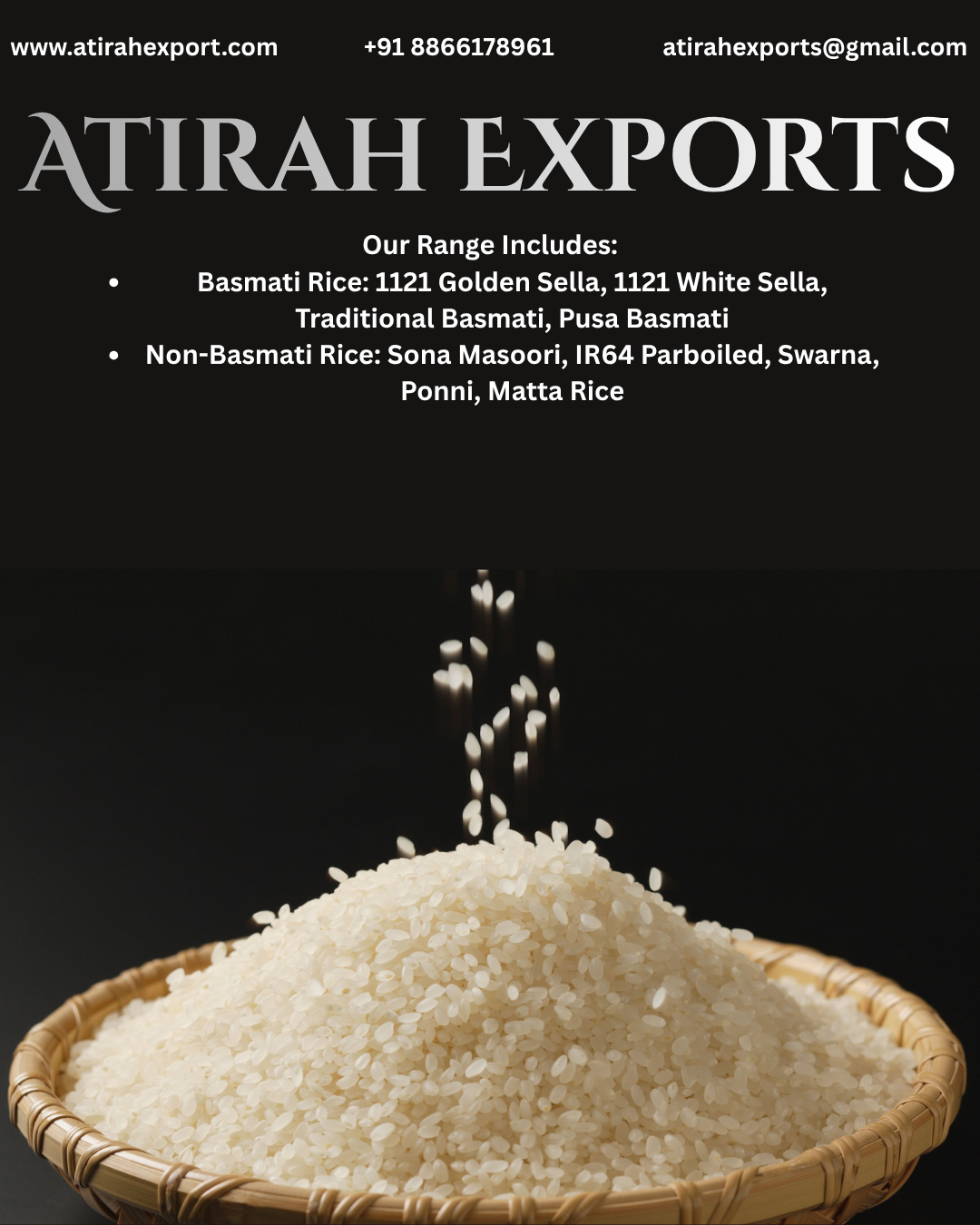
- Basmati and non-Basmati rice
- Tea
- Coffee
- Wheat flour/Maida
- Mango
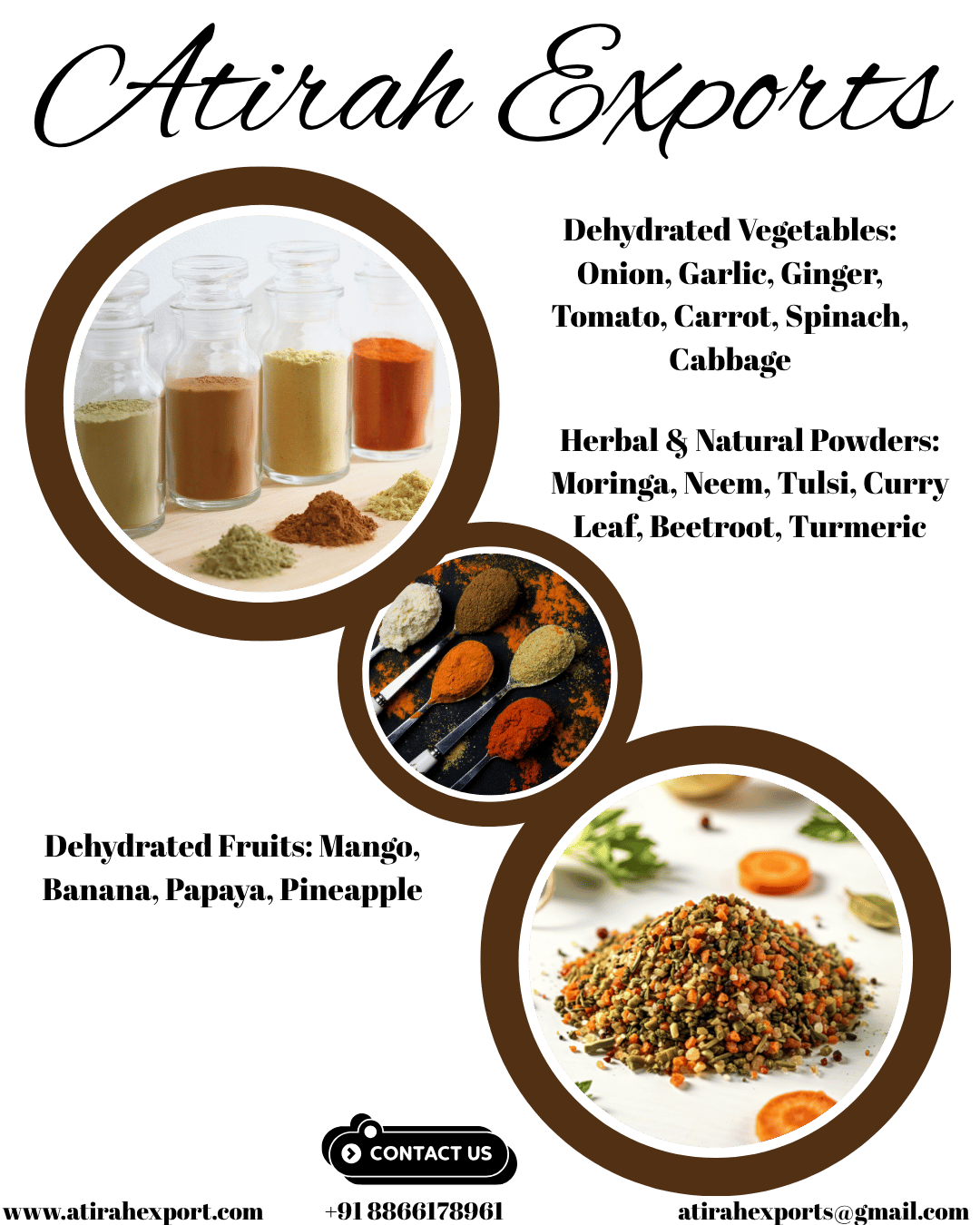
- Herbal and natural powders
- Whole and ground spices
- Textiles
- Biodegradable and eco-friendly products
- Compostable disposable products
- Other products according to qualified buyer requirements
Our role is not limited to one product.
As a merchant exporter, we can work with buyers seeking multiple relevant products from India, subject to specification, availability, compliance, and commercial feasibility.
Before Your Next Order from India, Ask Better Questions
A successful import transaction does not begin when the container is loaded.
It begins much earlier—with the right questions.
Before placing your next order, make sure you understand:
- Exactly what you are buying.
- How the quality will be verified.
- Which samples and documents are available.
- How the goods will be packaged.
- Which export documents will be provided.
- What the complete commercial terms are.
- Who will take responsibility for coordinating the transaction.
The right exporter should be willing to discuss these questions openly.
Because international sourcing is not simply about moving products from one country to another.
It is about building a supply relationship that works.
Looking for an Indian sourcing partner?
If you are an importer, distributor, wholesaler, retailer, or procurement company looking to source from India, Atirah Exports can discuss your exact requirement and evaluate a suitable sourcing solution.
Your Requirement. Our Indian Sourcing Network. One Reliable Export Partner.
🌐 www.atirahexport.com
📧 info.ae@atirahexport.com
📧 atirahexports@gmail.com
📞 +91 8160378961 | +91 7990922402 | +91 8866178961
📍 Surat, Gujarat, India