
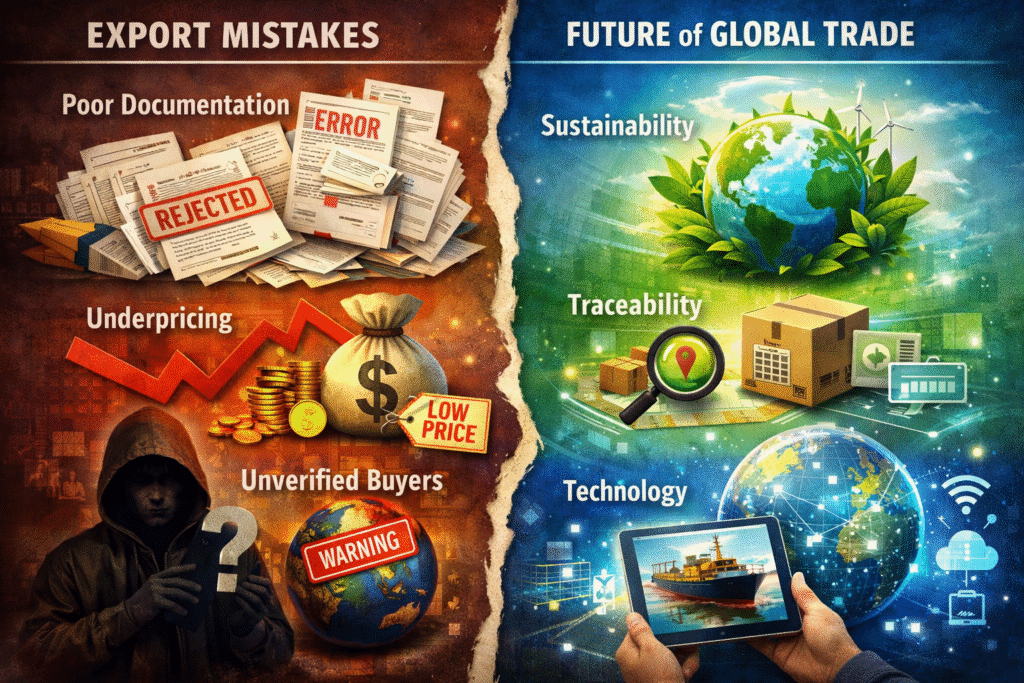
Global trade is evolving faster than ever. While export opportunities are expanding across continents, many businesses still face losses due to avoidable mistakes. At the same time, the future of exports is being reshaped by sustainability, traceability, and technology. Understanding both is essential for long-term success.
Common Export Mistakes to Avoid
One of the most critical errors in exports is poor documentation. Incomplete or incorrect documents such as invoices, packing lists, certificates of origin, or shipping instructions can lead to customs delays, penalties, or shipment rejection. In a compliance-driven global market, documentation accuracy is non-negotiable.
Another frequent mistake is underpricing export products. While competitive pricing is important, underpricing often ignores hidden costs such as logistics, insurance, currency fluctuation, port charges, and compliance expenses. This results in thin margins or financial losses, especially for new exporters.
Unverified buyers remain one of the biggest risks in international trade. Fraudulent inquiries, fake purchase orders, and unrealistic payment terms can severely impact exporters. Verifying buyer credentials, company background, and payment capability is essential before proceeding with any deal.
Future of Exports: What Businesses Must Adapt To
The future of global trade demands sustainability. Buyers increasingly prefer suppliers who follow ethical sourcing, eco-friendly packaging, and responsible supply chains. Sustainability is no longer optional—it is a competitive advantage.
Traceability is becoming a standard requirement, especially in food and agro-commodity exports. Buyers want to know product origin, processing standards, and quality consistency. Transparent traceability builds trust and strengthens long-term buyer relationships.
Technology-driven trade is redefining exports. Digital documentation, online buyer verification, CRM systems, and real-time shipment tracking are helping exporters reduce risk, improve efficiency, and scale faster. Exporters who adopt digital tools early gain a strong edge in global markets.
Conclusion
Avoiding basic export mistakes while aligning with future trade trends is the key to sustainable export growth. Strong documentation practices, fair pricing, buyer verification, and adoption of sustainable and digital systems ensure not just survival—but leadership—in international trade.
Contact Details
Atirah Exports
📧 Email: info.ae@atirahexport.com | atirahexports@gmail.com
🌐 Website: www.atirahexport.com
📞 Mobile / WhatsApp: +91 8160378961 | +91 7990922402 | +91 8866178961