
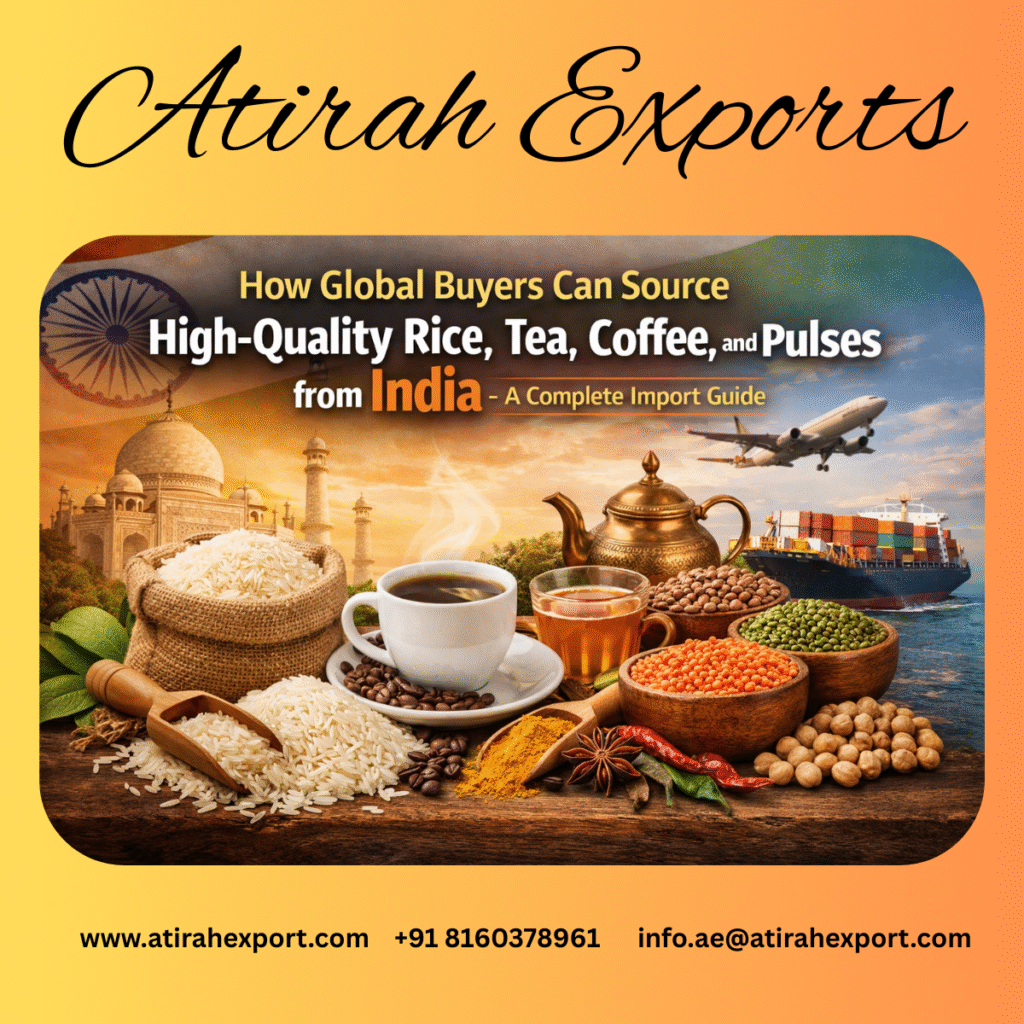
Introduction
India is one of the world’s largest producers and exporters of agricultural products. From aromatic Basmati rice to flavorful tea and coffee, and nutritious pulses, Indian food commodities are trusted by buyers across the globe.
For international importers, sourcing from India offers several advantages including competitive pricing, consistent supply, diverse varieties, and strong agricultural heritage. However, for buyers who are new to importing from India, understanding the sourcing process, quality standards, and documentation is essential.
This guide explains how global buyers can successfully import high-quality rice, tea, coffee, and pulses from India, while ensuring reliability, compliance, and smooth logistics.
Why India is a Global Hub for Agricultural Exports
India’s agricultural sector is one of the largest in the world. The country exports food products to more than 190 countries, serving wholesalers, retailers, food processors, and distributors.
Key reasons why international buyers source from India include:
1. Wide Variety of Products
India offers a diverse range of food commodities including:
- Basmati Rice – Traditional Basmati, 1121, 1509, 1401 varieties
- Non-Basmati Rice – IR64 and other varieties
- Tea – CTC Tea, Green Tea, Orthodox Tea
- Coffee – Arabica and Robusta beans, instant coffee
- Pulses – Chickpeas, lentils, pigeon peas, and other legumes
This wide product availability allows importers to source multiple commodities from one country.
2. Competitive Global Pricing
Indian exporters benefit from:
- Large agricultural production
- Efficient processing facilities
- Cost-effective labor
These factors allow buyers to obtain high-quality products at competitive international prices, making India an attractive sourcing destination.
3. Strong Export Infrastructure
India has a well-developed export ecosystem including:
- Modern processing plants
- Global shipping ports such as Mundra, Nhava Sheva, and Chennai
- International quality certifications
- Efficient logistics and container shipping
This infrastructure supports smooth and reliable global trade.
Key Products Exported from India
Rice
India is the largest exporter of rice in the world. Indian rice is widely appreciated for its aroma, grain length, and cooking quality.
Popular export varieties include:
- 1121 Basmati Rice – Extra-long grains and premium aroma
- Traditional Basmati Rice – Classic flavor and fragrance
- 1509 Basmati Rice – High yield and affordable option
- IR64 Non-Basmati Rice – Commonly used for large-scale consumption
Rice from India is exported to countries in the Middle East, Africa, Asia, and North America.
Tea
India is globally famous for producing some of the finest teas.
Common export varieties include:
- CTC Tea (Crush, Tear, Curl) – Strong flavor, widely used in tea blends
- Green Tea – Known for its health benefits and antioxidants
- Orthodox Tea – Premium quality tea with delicate flavor
Indian tea is highly demanded by wholesalers, retailers, and beverage manufacturers worldwide.
Coffee
Indian coffee is known for its smooth flavor and balanced acidity.
Main varieties include:
- Arabica Coffee Beans
- Robusta Coffee Beans
- Instant Coffee
Coffee from India is exported to several global markets including Europe, Asia, and the Middle East.
Pulses
India is both a producer and exporter of various pulses that are widely used in global cuisine.
Popular export pulses include:
- Chickpeas
- Lentils
- Pigeon peas
- Split pulses
Pulses are valued for their high protein content and nutritional benefits, making them essential food commodities worldwide.
Steps for Global Buyers to Import from India
Importing food commodities from India is a straightforward process when working with a reliable exporter.
Step 1: Identify a Reliable Exporter
Choosing the right supplier is critical for successful international trade.
Buyers should evaluate exporters based on:
- Experience in international trade
- Product quality standards
- Certifications and documentation
- Communication transparency
- Ability to supply consistent quantities
Step 2: Confirm Product Specifications
Before placing an order, buyers should confirm details such as:
- Product variety
- Quality grade
- Packaging type
- Bag weight (e.g., 25 kg or 50 kg)
- Quantity required
- Destination port
This ensures accurate pricing and shipment planning.
Step 3: Request Samples
Professional exporters usually provide product samples so buyers can evaluate:
- Grain quality
- Aroma and flavor
- Moisture level
- Processing standards
Sample verification helps buyers ensure the product meets their market requirements.
Step 4: Finalize Pricing and Payment Terms
Common export payment methods include:
- Advance bank transfer
- Letter of Credit (LC)
- Secure trade payment arrangements
Payment terms should always be clearly agreed before shipment.
Step 5: Shipping and Documentation
Export shipments from India include important documents such as:
- Commercial Invoice
- Packing List
- Bill of Lading
- Certificate of Origin
- Phytosanitary Certificate (for agricultural products)
These documents ensure smooth customs clearance in the importing country.
Choosing a Reliable Indian Export Partner
Working with a trustworthy merchant exporter ensures:
- Quality assurance
- Transparent communication
- Accurate documentation
- Efficient logistics coordination
- Long-term business relationships
Professional exporters also help buyers manage product sourcing, packaging customization, and shipment planning.
Conclusion
India continues to be a major supplier of rice, tea, coffee, and pulses to global markets. With its strong agricultural base, diverse product range, and competitive pricing, the country offers excellent sourcing opportunities for international buyers.
By partnering with a reliable exporter and clearly defining product specifications, global importers can benefit from consistent quality, smooth logistics, and long-term trade success.
Source High-Quality Food Products from India
If you are looking to import rice, tea, coffee, pulses, or other agricultural products from India, reliable sourcing and professional export support are essential.
Atirah Exports is committed to supplying quality agricultural products and building long-term relationships with international buyers.
🌐 Website: www.atirahexport.com
📧 Email: info.ae@atirahexport.com | atirahexports@gmail.com
📞 Mobile/WhatsApp: +91 8160378961 | +91 7990922402 | +91 8866178961