Global trade is changing rapidly.
For international buyers, selecting a supplier is no longer simply about finding the lowest price. Buyers increasingly need suppliers who can provide consistent quality, transparent communication, reliable documentation, customized solutions, and dependable shipment execution.
This is where the role of an Indian exporter is evolving.
A professional exporter should not be viewed merely as a company that supplies products from India. The right exporter can become a strategic sourcing partner who understands the buyer’s requirements, manages supplier coordination, supports documentation, and helps create a more reliable international supply chain.
What Does a Strategic Sourcing Partner Actually Mean?
A strategic sourcing partner goes beyond fulfilling individual purchase orders.
Instead of asking only, “What product do you want?”, a professional sourcing partner looks at the complete procurement requirement:
- What specification does the buyer need?
- What quality standard is required?
- What packaging is appropriate?
- What quantity and shipment frequency are expected?
- Which Incoterm is suitable?
- Which destination port should be used?
- What documentation is required?
- How can supply consistency be maintained?
- How can procurement risks be reduced?
This approach creates a more structured and sustainable buyer-supplier relationship.
1. Quality Consistency Is More Important Than a One-Time Good Shipment
A successful first shipment is only the beginning.
International buyers need consistency across repeated orders. Product specifications, quality parameters, packaging, labeling, and shipment preparation should remain aligned with the agreed requirements.
Professional exporters should therefore establish quality checks before dispatch and communicate specifications clearly before production or procurement begins.
For food and agricultural products, this can include parameters such as grade, variety, moisture, purity, appearance, packing, shelf life, and applicable certifications.
2. Buyers Expect Transparent Communication
Communication can make or break an international transaction.
A reliable exporter should provide clear information regarding:
- Product availability
- Specifications
- Pricing
- Production or procurement timelines
- Packaging
- Documentation
- Shipment schedules
- Payment terms
- Any potential delays or changes
Transparency helps buyers make decisions confidently and reduces misunderstandings during international transactions.
3. Customized Packaging Can Create a Competitive Advantage
Global buyers often have different packaging requirements depending on their market.
Some may require retail-ready packaging, while others may need bulk commercial packaging. Private-label and customized packaging may also be important for certain markets.
A strategic sourcing partner should therefore be capable of discussing:
- Bag weight
- Packaging material
- Printing requirements
- Labeling
- Branding
- Bulk or retail packaging
- Buyer-specific specifications
The objective is not simply to sell a standard product but to find a commercially suitable solution.
4. Competitive Pricing Should Not Mean Compromising Reliability
Price remains an important factor in international procurement.
However, the lowest quotation is not always the lowest total cost.
Unexpected quality issues, shipment delays, incorrect documentation, poor packaging, communication gaps, and inconsistent supply can create significant hidden costs.
Global buyers should therefore evaluate the total sourcing value rather than comparing price alone.
A professional exporter should provide commercially competitive pricing while maintaining the quality and service standards agreed with the buyer.
5. Export Documentation Matters
International shipments require accurate documentation.
Depending on the product and destination, buyers may require documents such as:
- Commercial Invoice
- Packing List
- Certificate of Origin
- Bill of Lading
- Phytosanitary Certificate
- Health Certificate
- Fumigation Certificate
- Inspection documents
- Other product-specific certificates
Documentation requirements can vary by product and destination country.
An experienced exporter should understand these requirements and coordinate the documentation process carefully.
6. Logistics Should Be Part of the Solution
International sourcing does not end when the goods leave the warehouse.
The exporter and buyer must coordinate shipment planning, container requirements, port information, documentation, and delivery terms.
A strategic sourcing partner should understand the buyer’s destination port and preferred Incoterm, such as FOB or CIF, and coordinate the shipment accordingly.
Good logistics management can significantly improve supply-chain predictability.
7. Buyers Need Flexibility
Every buyer has different requirements.
One company may require Basmati rice in a specific variety and packing size. Another may need tea in a particular grade. A third may require customized packaging for its own market.
This is why flexibility is an important characteristic of a modern exporter.
As a merchant exporter, Atirah Exports can coordinate sourcing across multiple product categories and work toward buyer-specific requirements rather than restricting buyers to a single standardized product.
8. Verification and Trust Come Before Long-Term Business
International trade involves financial, logistical, and commercial risks for both sides.
Therefore, professional buyers and exporters should conduct appropriate due diligence before entering substantial transactions.
Buyers should evaluate:
- Company identity
- Business presence
- Product capability
- Export experience
- Communication quality
- Documentation
- Commercial terms
- Payment structure
- References where available
Likewise, responsible exporters should also understand the buyer’s business, requirements, destination market, and purchasing expectations.
Trust should be built through verification and transparent business practices—not simply through promises.
9. Long-Term Relationships Matter More Than One-Time Orders
The strongest international trade relationships are built over multiple transactions.
A reliable exporter should aim to understand a buyer’s business over time and improve the sourcing process with every shipment.
This can lead to:
- Better product planning
- More consistent specifications
- Improved packaging
- Faster communication
- Better shipment coordination
- More predictable procurement
- Long-term commercial cooperation
The goal should be to move from transactional selling toward strategic collaboration.
Why India Can Be a Valuable Sourcing Base
India offers international buyers access to a broad manufacturing and agricultural ecosystem, established export infrastructure, diverse product categories, and extensive supplier networks.
However, accessing this ecosystem efficiently can be challenging for overseas buyers.
Finding the right supplier, verifying capabilities, coordinating specifications, negotiating commercial terms, managing documentation, and arranging shipments can require considerable time and local knowledge.
This is where a capable Indian merchant exporter can create meaningful value.
Atirah Exports: More Than a Product Supplier
Atirah Exports, India, approaches international trade with a sourcing-partner mindset.
Our objective is to understand what the buyer actually needs and then coordinate the appropriate product, specification, packaging, commercial terms, documentation, and logistics requirements.
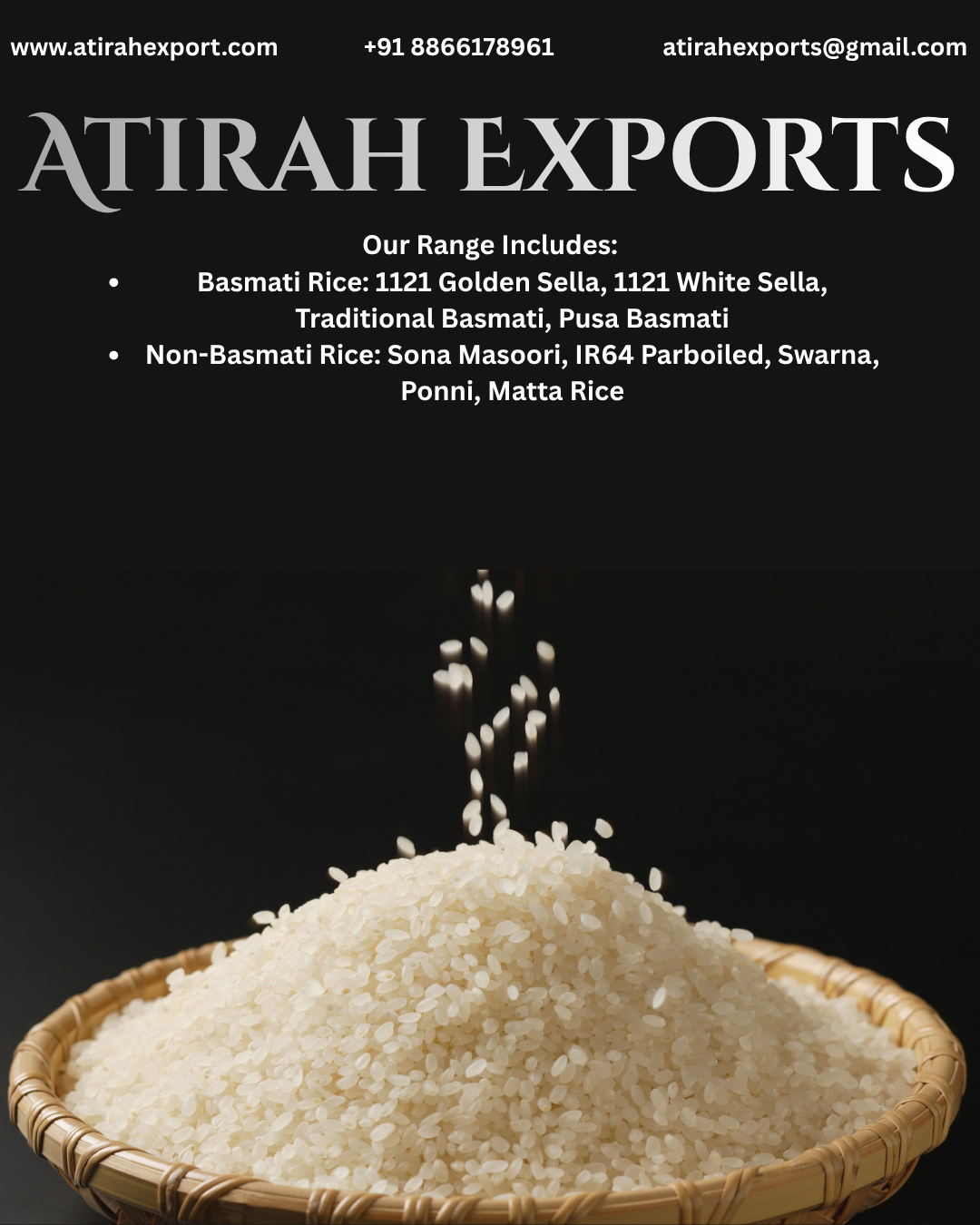
Our export portfolio includes Basmati and Non-Basmati rice, tea, coffee, wheat flour/Maida, mango, herbal and natural powders, whole spices, ground spices, textiles, biodegradable products, and eco-friendly compostable disposable products.
As a merchant exporter, we are not limited to a single product category. This enables us to explore broader sourcing requirements with international buyers where appropriate.
What Should Global Buyers Ask an Indian Exporter?
Before placing an international order, buyers should ask:
- Can you supply the exact required specification?
- What quality standards and inspection procedures apply?
- Can you provide customized packaging?
- What is the minimum order quantity?
- What is the production or procurement lead time?
- Which export documents can you provide?
- Can you quote FOB and/or CIF?
- Which destination port will be used for the quotation?
- What payment terms are available?
- Can you support repeat and long-term supply?
These questions can help buyers distinguish between a simple supplier and a potentially valuable sourcing partner.
The Future of Global Sourcing Is Built on Partnership
International procurement is becoming increasingly relationship-driven.
Price will always matter, but global buyers also need consistency, transparency, responsiveness, flexibility, compliance, and dependable execution.
The Indian exporter of the future should therefore think beyond the purchase order.
The real objective is to become a partner who helps buyers source efficiently, reduce procurement complexity, and build a dependable international supply chain.
Atirah Exports believes that the strongest export relationships are built on quality, transparency, communication, reliability, and long-term cooperation.
For global buyers looking to source from India, the right question may no longer be:
“Who can supply this product?”
It should be:
“Who can become a reliable strategic sourcing partner for our business?”
That is the difference between a supplier and a strategic sourcing partner.