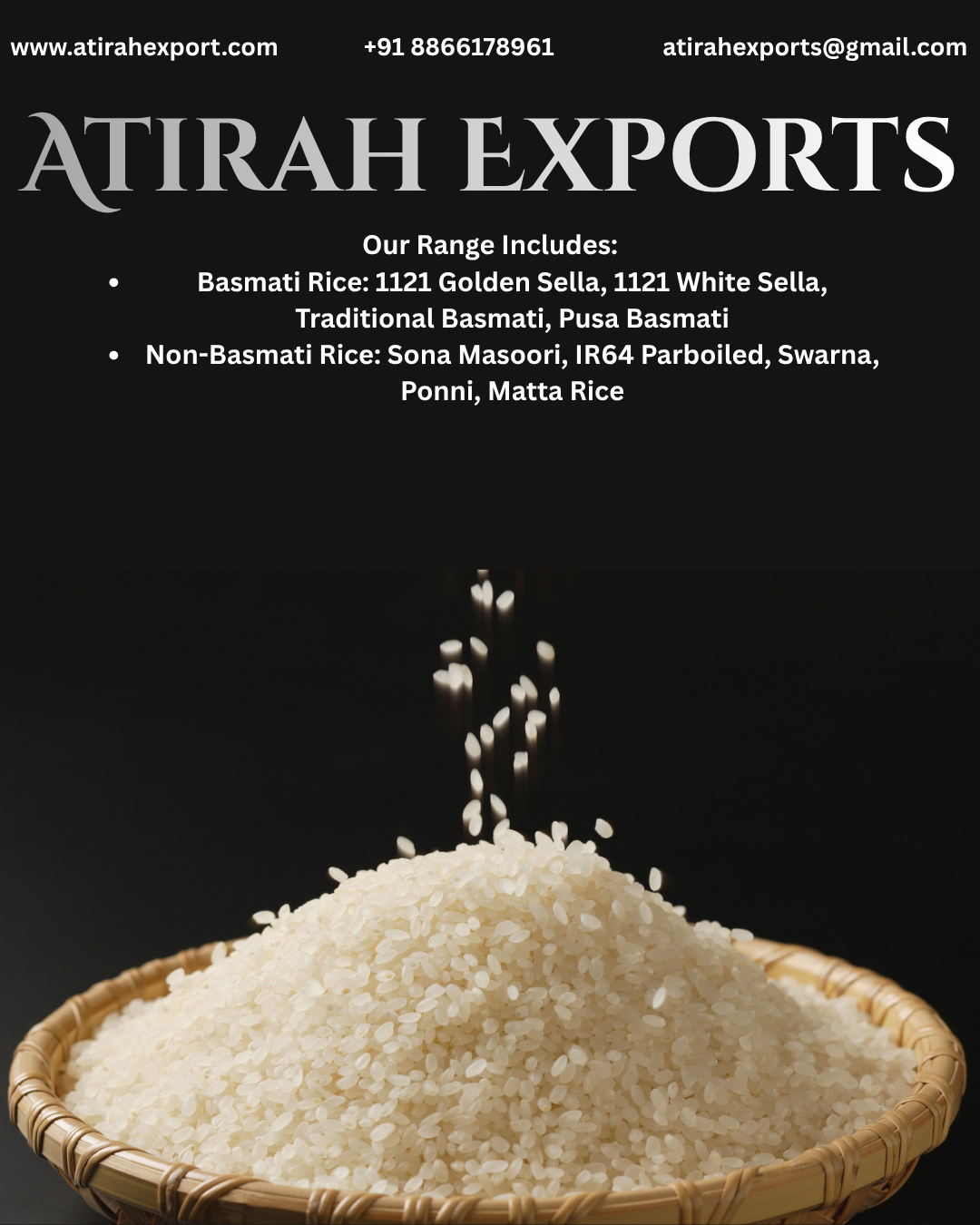
Rice remains the globe’s comfort food and India continues to shape the market. After two years of big harvests and shifting policy, 2025 is a year of opportunity for Indian exporters: government moves to remove export floor prices, large government stocks, and renewed demand from the Middle East, Africa and Southeast Asia are driving volume and variety-focused trade. Here’s a practical, market-facing look at the top ten Indian rice varieties (Basmati and Non-Basmati) that are in the strongest global demand in 2025 — and what exporters should watch. Reuters+2Reuters+2
Quick snapshot: what’s moving the market in 2025
India remains the world’s largest rice exporter and is actively pushing shipments to emerging markets after a strong monsoon and bumper production in 2024–25. Export flow is being helped by lifted restrictions and the removal of some floor prices for non-basmati grades. Reuters+1
Basmati continues to command premium prices and preference in Gulf and niche Western markets, while non-basmati staples (long-grain white and parboiled) dominate volumes to Africa, the Middle East and some Southeast Asian buyers. Dataversee Inc.+1
The top ten in global demand (2025) — quick list
Basmati (premium / aromatic)
1121 Basmati — the export workhorse: long grains, popular in Gulf and Europe. Cybex
Traditional / Classic Basmati (Punjab/Haryana variants) — small-batch aromatic types prized by premium retail & specialty buyers. happilytrade
1509 Basmati — growing interest from Gulf and African markets for its aroma and grain length. Dataversee Inc.
1401 / Pusa Basmati types — used by buyers seeking good cook-up quality and consistent supply. happilytrade
Sharbati / Kasturi-type aromatic basmati — niche demand in specialty stores and high-end hospitality. happilytrade
Non-Basmati (volume / staple)
6. IR64 — highest global demand among non-basmati whites in 2025; highly sought for affordability and widespread acceptance. tradologie.com+1
7. Sona Masoori — lightweight medium-grain popular in South Asia and some African markets for home-cooking uses. tradologie.com
8. Swarna (IR36 / Swarna) — reliable yield, favored in several African and Asian buyer lists. Freshdi+1
9. PR-11 / PR-106 (parboiled and sella types) — parboiled and sella processed grains remain top for markets needing long shelf life and high broken-grain tolerance. Freshdi+1
10. 25% & 5% Broken white rice (trade grades) — not a “variety,” but these broken-percent trade grades are crucial for African and Middle Eastern bulk buyers looking for cost-efficient staples. Demand surged after policy adjustments. Reuters
Why these varieties — short explanations
1121 Basmati: unmatched length and aroma-to-price balance; large share of basmati export value comes from 1121 and close relatives. Buyers in Saudi Arabia, UAE, Iraq and Europe still specify it first. Cybex
IR64: the world’s workhorse non-basmati — consistent quality, cost-effective, and accepted across broad cuisines. RFQs in 2025 show IR64 dominating non-basmati inquiries. Freshdi+1
Parboiled / Sella grades (PR-11, PR-106): these are value-dense: they store well, suit multiple cooking styles and are preferred by institutional and government buyers. Freshdi
2025 export trend takeaways — what exporters should act on
Volume opportunities exist — but so does price sensitivity. Strong production means more supply to sell, but many buyers will push on price; matching the right grade to buyer needs is critical. apeda.gov.in+1
Diversify markets beyond the Gulf. Emerging demand in Iraq, Indonesia, parts of Africa and new outreach to Mexico/Japan are showing up in 2025 RFQs. Don’t rely on a single region. Reuters
Quality + certifications matter for premium markets. For basmati and organic/eco labels, HACCP, FSSAI export documentation, and traceable packaging are non-negotiable when selling to premium retail chains. Dataversee Inc.
Offer multiple pack sizes and trade grades. Provide options: retail packs (1–5 kg) for supermarkets, and 25–50 kg sacks / bulk parcels for traders, plus 5%/25% broken grades for large buyers. Reuters
Monitor price signals from FAO / USDA / APEDA. Exporters who watch monthly FAO price updates, USDA outlooks and APEDA dashboards can time offers more competitively. FAOHome+2esmis.nal.usda.gov+2
Practical checklist for exporters (short)
Confirm the exact variety & processing (e.g., 1121 Sella vs raw 1121).
Provide COA, moisture/broken %, and packing photos in RFQ response.
Offer both retail & bulk pricing tiers.
Keep quick lead times and staggered shipments (buyers value reliability).
Track monthly APEDA / FAO price dashboards before quoting. apeda.gov.in+1
Final thought
2025 is shaping up to be a sellers’ market for Indian rice in volume terms — but buyers are choosy. Aromatic basmati will keep bringing premium margins if you match quality and certification; non-basmati staples (IR64, Sona Masoori, Swarna, parboiled grades) will drive bulk business and steady revenue. Keep your product information crisp, grades transparent, and target the right market segment for each variety.